How to layer lasagna the right way – easy, quick, and juicy!
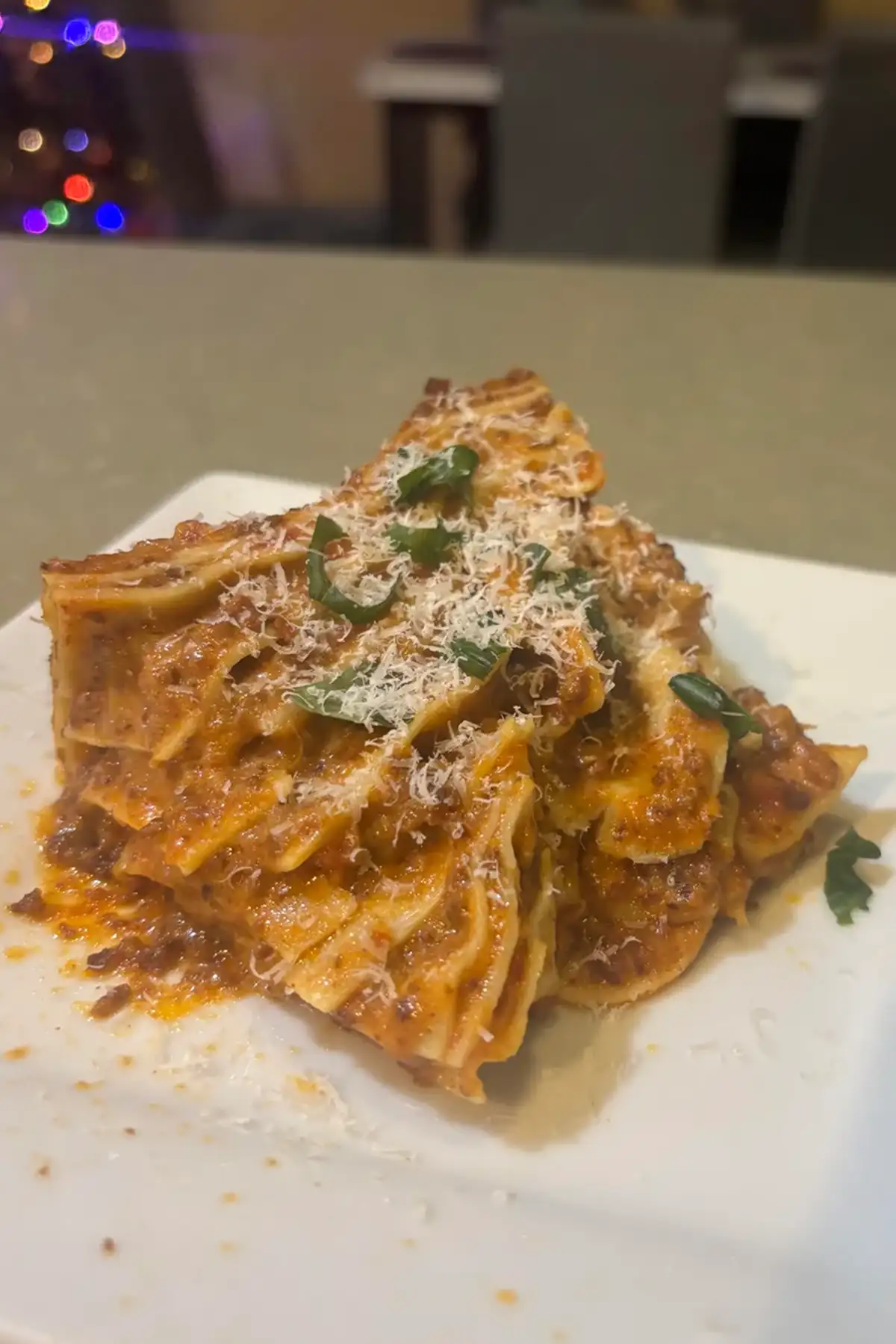
Start by spreading a thin layer of béchamel sauce (or some Bolognese sauce) on the bottom of the dish. Then follow this order:
Layers of pasta → Bolognese sauce → Béchamel sauce → a little cheese – and repeat the process 3–5 times.
Top with lasagna noodles, béchamel sauce, and plenty of cheese. This keeps everything nice and moist and makes the lasagna easy to serve.
Top with pasta sheets, béchamel sauce, and plenty of cheese. This keeps everything nice and moist and makes the lasagna easy to serve.
Why the right order is so important
Classic lasagna Bolognese consists of exactly three main components that must work together perfectly: the savory Bolognese sauce (meat and tomato sauce), the creamy béchamel sauce, and the lasagna sheets.
The Bolognese sauce provides the rich flavor and the necessary moisture. The béchamel sauce creates a velvety, creamy texture and prevents the dish from becoming too dry or too runny. The pasta sheets provide the structure – but only when they’re coated in sauce.
If you layer the ingredients incorrectly (for example, starting with dry noodles on top or using too little sauce), the noodles won’t absorb any liquid, will remain hard, or the lasagna will fall apart when you take it out. The correct order ensures that each noodle sheet is surrounded by moisture and cooks evenly in the oven.
The Best Order for Layering – Step by Step
For a standard baking dish (approx. 20 × 30 cm, 4–6 servings), you’ll usually need 3–5 layers of pasta. Here’s the best way to assemble it:
1. Prepare the mold
Lightly grease the baking dish with olive oil or butter. This prevents the bottom layer from sticking and makes it much easier to cut into portions later.
2. First layer – floor protection
Spread 2–4 tablespoons of béchamel sauce thinly over the bottom of the dish (alternatively, use a few tablespoons of Bolognese sauce). This protective layer ensures that the first layer of pasta sheets doesn’t sit directly on the dry bottom of the dish and become hard.
3. The Basic Pattern
- Place a layer of lasagna sheets in the dish. If necessary, trim them with scissors or a knife so they fit as snugly as possible (a slight overlap is fine, but avoid large gaps).
- Spread a generous amount of Bolognese sauce over the top – about 1/4 to 1/3 of the total amount per layer. Spread it all the way to the edges, paying special attention to the corners.
- Next, add the béchamel sauce – not too sparingly, but enough to cover the pasta well (about 4–6 tablespoons per layer).
- Optionally, sprinkle some grated cheese on top (Parmesan, Gouda, or mozzarella). A small amount is sufficient for the middle layers – about 20–30 g per layer.
4. Repeat until almost all of it is used up
Build up 3–4 complete layers this way. Make sure to save enough béchamel and cheese for the top layer.
5. Conclusion
- Last layer of lasagna sheets
- Spread the rest of the béchamel sauce evenly over the top – feel free to be generous here; this gives it a creamy texture and prevents it from drying out.
- Generously top with cheese: a good mix of Parmesan (for flavor) and mozzarella/Gouda (for a nice golden brown color) – a total of 100–150 g.
Click here for the original recipe from Bologna
How many layers are ideal?
- 3 layers of pasta → a slim, elegant lasagna (perfect for smaller pans or when you’re in a hurry). Baking time: about 35–45 minutes.
- 4 layers of pasta → the perfect balance and an absolute classic—nice and thick, juicy, and filling.
- 5 layers of pasta → recommended only for large baking dishes or if you want a really hearty lasagna (in which case, make more sauce!).
You can usually fit 3–4 trays per layer of pasta, depending on the size of the pans.
Practical Tips for Layering Lasagna
- It’s best to use ready-made lasagna sheets that don’t need to be pre-cooked (usually labeled “no-boil” or “ready-to-use”) – this saves a lot of time.
- Make sure to spread the sauce all the way to the edges – otherwise, the corners will dry out.
- The béchamel sauce can be a little thinner – it will thicken further in the oven.
- Bake the cheese on top at a very high temperature for the last 10–15 minutes (200–220 °C top and bottom heat or 180 °C convection) so that it turns golden brown without burning.
- Let it rest for at least 10–15 minutes after baking – this allows everything to set, making the lasagna much easier to cut.
Common Mistakes (and How to Avoid Them)
- Not enough sauce overall → dry, hard pasta → it’s always better to use a little more than too little.
- Start by placing the raw pasta sheets directly on the bottom → the bottom layer will remain hard → always cover with sauce!
- If you use only Bolognese sauce without béchamel → it will turn dark, dry, and crusty → always top with béchamel and cheese.
- Too much cheese in the middle layers → becomes greasy and heavy → use sparingly in the middle, generously on top.
With this method, you’ll end up with a lasagna that’s juicy, creamy, and a visual delight – just like at a real Italian restaurant.
Enjoy your meal and have fun layering!
Do you have any questions about lasagna? Let me know in the comments and I’ll answer them!

icookedameal.com